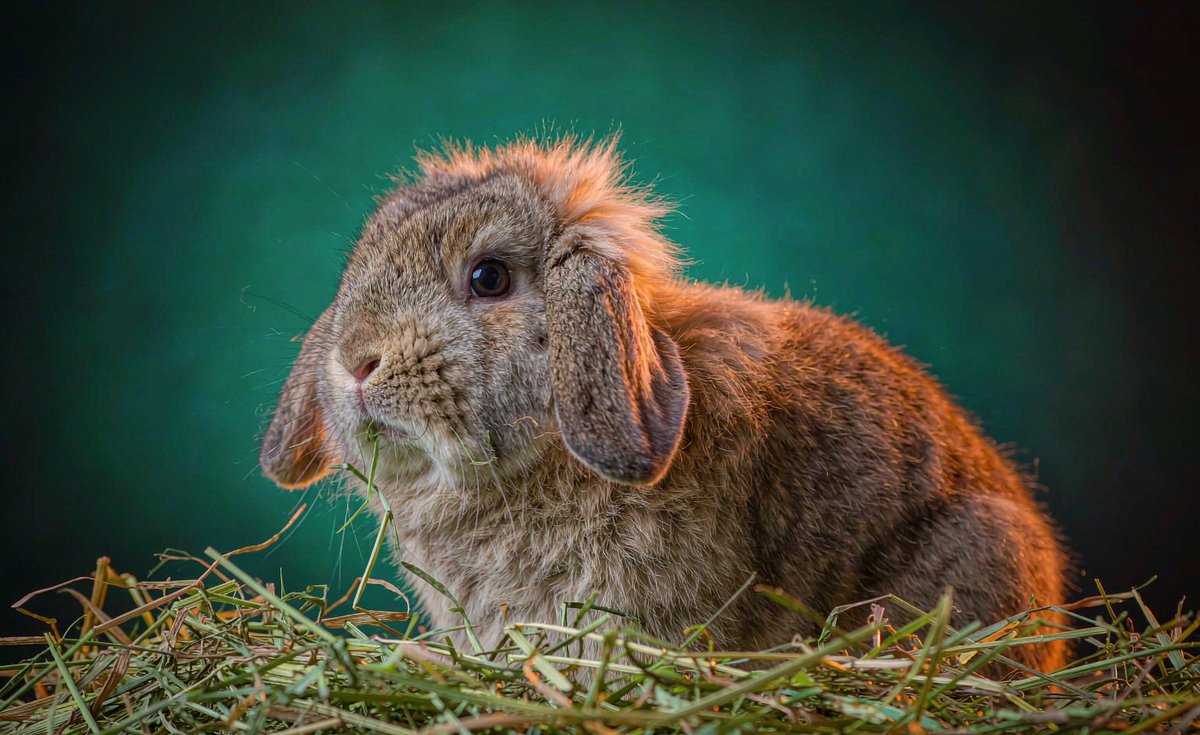
Last molting season, a rabbit owner in our group panicked at midnight: their Angora rabbit wouldn't eat, belly bloated, only a few small droppings left in the cage. Turns out it was peak molt and they hadn't brushed for days.
This is not rare. Rabbits differ from cats—cats can vomit hairballs, but rabbits cannot vomit; swallowed fur can only leave slowly via the gut. Too slow, and at best appetite drops, at worst bloating and stopped defecation. So "hairball management" is a daily task for rabbit homes, not optional.
1. Which rabbits are riskier
- Long-haired breeds: Angora, Lionhead—more fur, easily mats, most likely to trip;
- Molting season: concentrated shedding in spring/autumn, fur intake roughly doubles;
- Those eating little hay: little daily hay means a gut already moving slowly, fur moves out even worse.
Lock in a set of signals: smaller/fewer droppings, clearly lowered appetite, bloated belly. Any one of these—stop searching online, go straight to the vet; a stuck hairball is an emergency supplements cannot save.
2. The old trap: sliding it out with oil
Years ago everyone used mineral/vegetable-oil hairball paste—lubricate and slide it out. But too much oil burdens the rabbit gut, and how much to feed and whether the rabbit likes it are hard to gauge. I prefer another route.
3. What we do: fiber pushes, not oil lubricates
PACKAR's Herbal & Probiotic Rabbit Hairball Paste takes "fiber sweep + gut stabilization": uses 11 plant fibers (oat hay, alfalfa, barley grass, dandelion, pumpkin, carrot, etc.) to help the gut push fur out with the digesta, paired with probiotics for the gut environment, no mineral oil, no vegetable oil.
One often-misunderstood point to state clearly: it pushes fur out—it does not "dissolve" it inside the body. Keratinase and other ingredients are part of the formula, but the real backbone of hairball management is always ample dried hay + daily brushing. Ingredient and content details are plainly on the product page; feeding amounts follow packaging.
(Side note on our obsession: rabbits, chinchillas, hamsters, and guinea pigs metabolize nothing like cats and dogs, so for small-pet formulas we never force the cat/dog "hairball" logic onto them—we design by their own guts. Getting that right beats everything.)
4. Something ten times more important than the paste
Honestly, the paste is the cherry on top—dried hay is the foundation. Timothy hay is high-fiber, pushes the gut to move and carries fur out with stool; daily brushing in molt cuts intake at the source. Do those two well and most rabbits never need to worry about hairballs.
For: rabbits / chinchillas / hamsters / guinea pigs 3 months and older; how much depends on weight and molting—see product details. For more pairings, check FAQ and Ingredient Encyclopedia.
Commonly asked questions
Q: Can the paste "dissolve" fur?
A: No, and don't expect it to. It pushes it out, it does not break it down. Real "dissolving" relies on enough fiber and brushing as the base.
Q: How much to feed?
A: By weight and molting; the product packaging has a chart—don't guess by feel. Young rabbits need more care; when unsure, ask a vet first.
Q: What if the rabbit won't eat hay?
A: First rule out illness (stool, energy, weight together), then find ways to tempt eating; hay is a must, cannot be omitted.
This is nutritional science, not treatment advice. If a rabbit shows refusal to eat, bloating, or stopped defecation, don't wait—go to the vet. A stuck hairball is a life-threatening emergency.